Contrary to popular belief, you can gain muscle and lose fat at the same time. It's called body recomposition, and it's the alternative to the bulk-and-cut cycle most lifters assume is their only option. It's harder than doing one or the other exclusively, but it's absolutely achievable if you structure your nutrition and training the right way.
The reason most people fail at recomposition isn't effort. It's strategy. They either eat too little and stall muscle growth, or they train without prioritizing the things that actually drive the process.
This guide covers exactly what it takes: how to eat, how to train, and how to recover. No dramatic overhaul required. Just the right adjustments applied consistently.
Body Recomposition Key Takeaways
Before jumping into individual tips, here's the framework. Body recomposition works when three conditions are true simultaneously:
- Calorie intake is at or near maintenance, not so low you're burning muscle and not so high you're storing fat.
- Protein intake is high enough to protect and build muscle tissue.
- Training stimulus is heavy enough to tell your body that muscle is worth keeping.
Miss any one of these and the process stalls. The six tips below are how you hit all three consistently.
1. Eat at Maintenance and Increase Your Activity Level
Body recomposition doesn't work on a steep caloric deficit. According to the National Academy of Sports Medicine (NASM), losing weight on average requires a 500-calorie daily deficit.[3] That rule applies generally to weight loss, not muscle growth. A 500-calorie deficit signals to your body that energy is scarce, making muscle tissue a luxury it cannot afford to build or keep.
Body recomposition requires a different approach. Instead of starving your body, eat at or just below your maintenance calories and increase your training volume to create a slight energy gap. On rest days, hit your maintenance number. On training days, add 200-300 calories to support recovery and muscle building. Because you'll be burning more through training, those extra calories won't be stored as fat.
To find your maintenance, calculate your macros using a macro calculator and set your goal to maintenance. Track macros, not just calories. The ratio of protein, carbs, and fat matters more than the total number once you're this close to maintenance.
The goal is a body that has enough fuel to build and perform, while staying active enough to keep burning at a rate that reduces fat over time.
2. Eat Enough Protein, Then a Little More
Protein is the single most important nutritional lever for body recomposition. It preserves muscle tissue under stress, drives muscle protein synthesis (the process that builds new muscle), and keeps you full enough to stay consistent on your calories.
Aim for a minimum of 1 gram of protein per pound of bodyweight. If you're training hard and pushing toward a leaner physique, go to 1.2-1.5 grams. Research published in the Journal of Nutrition found that a higher-protein diet (at least 30% of total calories from protein) preserved significantly more lean mass during fat loss compared to a standard carbohydrate-based diet: 1.7 lbs of muscle lost versus 3 lbs in the lower-protein group.[2]
A high-protein diet also increases your metabolic rate after eating (the thermic effect of food), meaning you burn more calories just processing the protein you consume.
Prioritize whole food protein sources: chicken, lean beef, fish, eggs, Greek yogurt, legumes. If hitting your daily target from food alone is a struggle (and for most people it is), a quality whey protein or pea protein supplement fills the gap without pushing your calories over.
3. Eat Smarter Carbs, Not Fewer Carbs
You don't have to eliminate carbs, but you do need to be strategic about which ones you eat and when. Refined carbs (white bread, pastries, chips, sugary drinks) spike insulin, offer zero lasting fullness, and make staying at maintenance harder. Swap them, not your total intake.
Build your carb base around complex, high-fiber sources: sweet potatoes, oats, fruit, quinoa, chickpeas, and dark leafy greens. These digest slowly, fuel your training, and keep cravings down, which is the actual problem people run into when they try to hold a consistent intake.
Timing matters. Aim for 1.5 grams of carbs per pound of bodyweight on training days, concentrated around your sessions. Eat a carb-containing meal 90-120 minutes before training, and refuel with carbs post-workout when muscle glycogen replenishment is highest. On rest days, pull back to around 1.0 grams per pound.
This isn't carb cycling in the extreme sense. It's just matching your fuel to your output. That's what experienced lifters already do.
4. Make Strength Training Your Primary Focus
This is where body recomposition lives or dies. You can eat perfectly and still end up just skinnier if you're not training hard enough to signal muscle growth. Cardio burns more calories per session, but strength training reshapes your body composition, and the effect keeps going long after you leave the gym.
After a heavy strength session, your body continues burning calories at an elevated rate for up to 16 hours as it repairs and rebuilds muscle tissue. That's the metabolic advantage that cardio can't replicate. The muscle you build also permanently increases your resting metabolic rate, meaning your body burns more at baseline every day.
Train heavy, 3-4 sessions per week, 45-60 minutes. Center each session on compound movements: deadlifts, squats, bench press, rows, overhead press. These recruit the most muscle mass per set, which gives you the biggest stimulus for growth and fat burning simultaneously. Keep rest periods between 60-90 seconds on accessory work and 2-3 minutes on heavy compound sets.
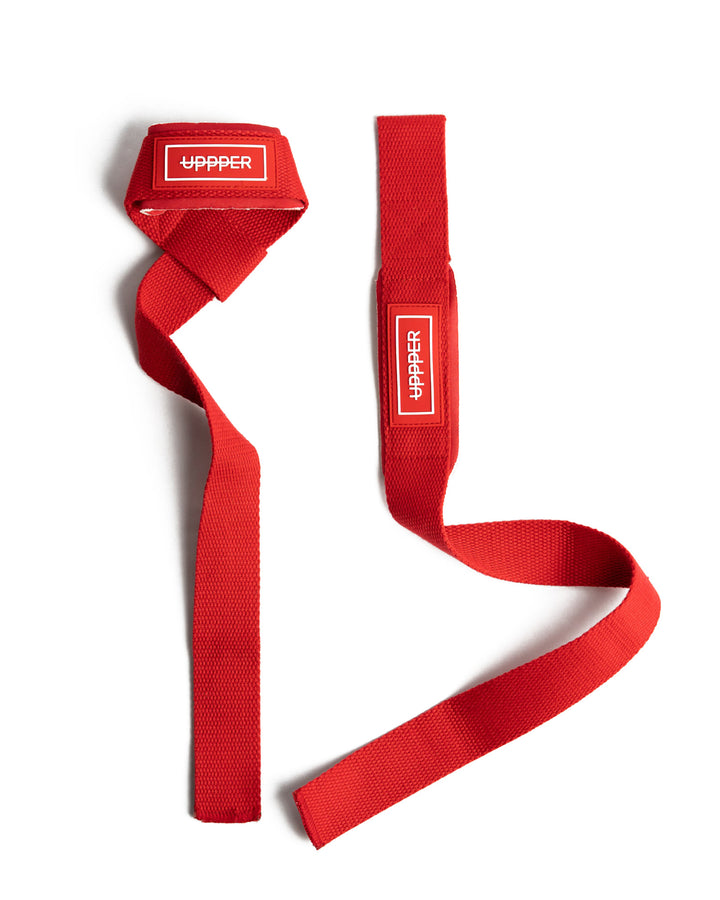
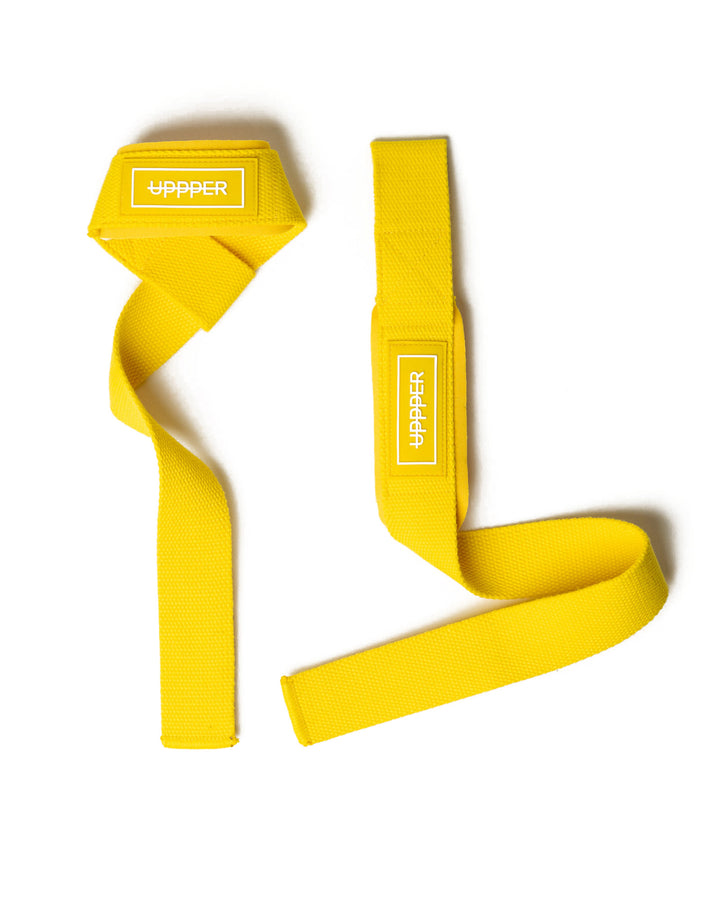
When you're working near your capacity on heavy pulls and rows, your grip and lower back are usually the first things to fail, not the muscles you're actually training. UPPPER Lifting Straps remove grip as the limiting factor so you can keep the stimulus where it belongs.
5. Add Cardio That Burns Fat Without Burning Muscle
What Kind of Cardio Should You Do for Body Recomposition?
Not all cardio serves your goals equally here. Long, steady-state sessions (45+ minutes at moderate intensity) are effective at burning calories, but they can also trigger a state where your body prefers to break down muscle tissue for fuel. For body recomposition, where preserving every ounce of lean mass matters, that's a problem.
High-intensity interval training (HIIT), alternating between hard effort and rest, typically for 15-25 minutes, burns fat efficiently while preserving muscle. Studies confirm HIIT is more effective at reducing body fat than steady-state cardio at matched calorie expenditure, and it doesn't compete with your strength adaptations the way long cardio does.
Keep HIIT sessions to 2-3 per week. More than that and it starts interfering with strength training recovery. If your lifts are declining, cut back on the cardio, not your strength work.
HIIT vs. Steady-State Cardio for Body Recomposition
Here's how the two options compare when your goal is building muscle while losing fat:
| HIIT | Steady-State Cardio | |
|---|---|---|
| Session length | 15-25 minutes | 30-60 minutes |
| Fat burning efficiency | High | Moderate |
| Muscle preservation | High | Lower (longer sessions) |
| Recovery demand | High; needs rest days | Lower |
| Interference with strength | Minimal at 2-3x/week | Moderate to high at high volume |
| Best use | Primary fat-burning cardio | Active recovery, Zone 2 base |
Bottom line: HIIT is the default for body recomposition. Keep steady-state sessions short (20-30 min) and use them on lighter training days if you need additional calorie burn.
6. Prioritize Sleep and Manage Stress
Sleep is when muscle gets built. After a training session, your body releases growth hormone and begins repairing the tissue you just broke down, and the vast majority of that repair happens during deep sleep. Cut your sleep short and you're literally cutting off the process.
Poor sleep also raises cortisol (your primary stress hormone), which suppresses fat burning, increases appetite, especially for sugar, and accelerates muscle breakdown. A study of over 1,000 participants found that people with consistently poor sleep had disrupted appetite-regulating hormones - specifically elevated ghrelin (which makes you hungry) and lowered leptin (which tells you you're full) - and higher BMI compared to those who slept 7-9 hours.[4] The hormonal environment matters.
Aim for 7-9 hours. Protect your sleep window the same way you protect your training sessions, because for body recomposition, they're equally important.
Managing stress outside the gym matters too. Chronically elevated cortisol creates a hormonal environment that actively fights the body composition changes you're working toward. Learn more about how cortisol affects fat loss and what to do about it.
FAQs
How long does body recomposition take?
Body recomposition is slower than either straight fat loss or muscle building because you're doing both simultaneously. Most people see measurable changes in body composition (looser clothes, visible muscle definition) within 8-12 weeks of consistent effort. The scale often doesn't move much, which is expected: you're trading fat for muscle, and because muscle is denser than fat, it takes up significantly less space per pound.
How do I know if body recomposition is working if the scale isn't moving?
Track progress through measurements and photos, not scale weight. Measure your waist, hips, arms, and thighs every 2-3 weeks. Take a photo in the same lighting and pose every 30 days. A shrinking waist with stable or increasing weight means it's working exactly as it should.
Can beginners do body recomposition?
Yes, beginners actually have an advantage. Because their muscles are highly responsive to new training stimulus, beginners can build muscle at a faster rate while losing fat, even in a slight caloric deficit. The more training experience you have, the more precisely your nutrition and training need to be structured.
Should I do cardio on the same day as strength training or on separate days?
Either works, but if you do them the same day, do strength first. Performing cardio before lifting depletes glycogen stores and blunts the quality of your strength session. Post-lift cardio has minimal interference with muscle adaptations. If you're doing HIIT, give yourself at least 6-8 hours between it and your next strength session.
Is body recomposition possible without tracking macros?
It's harder, but possible. The non-negotiables are: high protein (use a rough target of 1 gram per pound of bodyweight), minimizing processed carbs and sugar, and eating consistently around your estimated maintenance. Tracking at least your protein for the first few weeks helps you calibrate what "enough" actually looks like.
Train Like You Mean Both
Body recomposition rewards the lifter who trains hard, eats precisely, and recovers seriously. It's not the fastest path to either a bigger body or a leaner one, but it's the path that builds the physique you actually want, without having to undo a bulk or start over.
Stop tracking only by the scale. Track by what you see in the mirror, what you lift in the gym, and how your clothes fit. Those numbers tell the real story.
If your grip is what's holding your heavy pulls back before your muscles actually fail, that's not a strength problem. That's an equipment problem. Shop UPPPER Lifting Straps
References
- Barakat, C., Pearson, J., Escalante, G., Campbell, B., & De Souza, E. O. (2020). Body Recomposition: Can Trained Individuals Build Muscle and Lose Fat at the Same Time? Strength & Conditioning Journal, 42, 7-21. https://doi.org/10.1519/ssc.0000000000000584
- Longland, T. M., Oikawa, S. Y., Mitchell, C. J., Devries, M. C., & Phillips, S. M. (2016). Higher compared with lower dietary protein during an energy deficit combined with intense exercise promotes greater lean mass gain and fat mass loss: a randomized trial. The American Journal of Clinical Nutrition, 103(3), 738-746. https://doi.org/10.3945/ajcn.115.119339
- National Academy of Sports Medicine (NASM). (2021). NASM Essentials of Personal Fitness Training (7th ed.). Jones & Bartlett Learning.
- Taheri, S., Lin, L., Austin, D., Young, T., & Mignot, E. (2004). Short sleep duration is associated with reduced leptin, elevated ghrelin, and increased body mass index. PLoS Medicine, 1(3), e62. https://doi.org/10.1371/journal.pmed.0010062