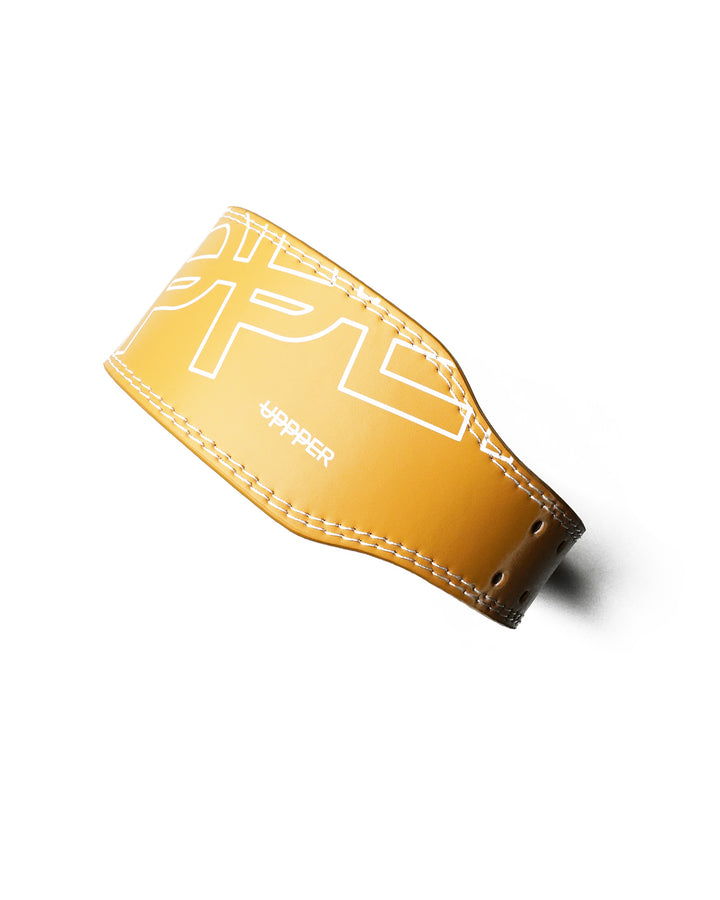
Your lifting belt size is determined by your waist measurement at the exact spot you'll wear it during a lift. Not your pant size, not your shirt size, and not whatever size your training partner runs. Waist circumference at the belly button is the only number that matters.
Most lifters get this wrong the same way: they guess based on the size they wear in joggers, or they order a medium because that's what they always order. A belt that's sized off your clothes instead of your actual waist either slides during a heavy set or cuts off your air before your second rep.
This guide walks through the exact measurement method, UPPPER's real size charts for both prong and lever belts, and how to know you've picked the right one before you check out.
What's Covered
- Why belt sizing actually matters for your brace
- How to measure your waist correctly
- UPPPER's official prong and lever belt size charts
- Prong vs lever: which fit works for you
- Signs your belt is the wrong size
Why Lifting Belt Sizing Actually Matters
A belt's job is to give your core something to brace against. When you take a breath and push your abs out against the belt, you're building intra-abdominal pressure, turning your torso into a rigid cylinder that supports your spine under load. A belt that's the wrong size breaks that entire mechanism before you even unrack the bar.
Here's what goes wrong at each end:
- Too loose: there's no resistance to brace against. You can push your stomach out all you want - if the belt has slack, you're not building pressure, you're just moving material.
- Too tight: you can't take a full breath before the lift, which means you're bracing against a half-inflated cylinder instead of a full one.
- Right size, wrong style: a prong belt sized correctly can still ride up on a deadlift if it's not positioned right, and a lever belt sized correctly won't help you if you've locked it at the wrong hole.
A belt that doesn't fit isn't a support tool. It's a placebo.
How to Measure Your Waist for a Lifting Belt
Skip the tape-measure-over-jeans method. Do it right:
- Find your spot. Measure around your waist at the exact height you'll wear the belt during training. For most lifters, that's right around the belly button, not at the hips.
- Wear what you'll train in. Measure with a thin shirt on, the same way you'd actually be dressed under the belt in the gym.
- Keep the tape snug, not tight. You want the tape flush against your body without pulling it tight enough to compress your stomach.
- Exhale normally before you read the number. Don't suck in. You're not trying to hit a smaller size, you're trying to get an accurate one.
That number is what you match against the size chart. Not your waist size on a clothing tag, which runs on a completely different measurement standard.
UPPPER Lifting Belt Sizing Charts
UPPPER runs two belt sizing systems, one for the double-prong belt and one for the lever belt, because the hardware and construction size differently. Make sure you match your waist measurement to the correct chart for the belt you're buying.
Prong Belt Sizing
| Size | Waist (inches) | Waist (cm) |
|---|---|---|
| S | 23 - 29 | 58.5 - 73.5 |
| M | 28 - 33 | 71 - 84 |
| L | 32 - 37 | 81 - 94 |
| XL | 35 - 41 | 89 - 104 |
The UPPPER Prong Lifting Belt is built from microfiber vegan leather, 4" wide tapering to 2.5" at the front, with a double-prong buckle that lets you fine-tune the fit hole-to-hole.
Lever Belt Sizing
| Size | Waist (inches) | Waist (cm) |
|---|---|---|
| XS | 23 - 25 | 58.5 - 63.5 |
| S | 25 - 30 | 63.5 - 76 |
| M | 30 - 34 | 76 - 86 |
| L | 34 - 39 | 86 - 99 |
| XL | 39 - 44 | 99 - 112 |
The UPPPER Lever Belt is 10mm thick, built with microfiber leather over an internal layer of genuine leather, and locks to one fixed hole with a flip lever instead of a prong. That's why the size bands are narrower: a lever belt has to be dialed in closer to exact, since you're not adjusting hole-to-hole mid-session the way you can with a prong.
Prong Belt vs. Lever Belt: Which Fit Works for You
Both belts increase intra-abdominal pressure the same way. Where they differ is how, and how precisely, that fit gets locked in.
| Feature | Prong Belt | Lever Belt |
|---|---|---|
| Fastening | Double prong, hole-to-hole | Flip lever, one fixed setting |
| Adjustability | Easy micro-adjustments mid-session | Fixed, needs a tool to reset |
| Thickness | Standard, flexible from day one | 10mm, stiffer, breaks in over time |
| Best for | Weight or waist that shifts (cuts, bulks, bloat) | Lifters training at a consistent, heavy load |
| Price | $40 | $120 |
Bottom line: if your waist measurement moves around, training through a cut, a bulk, or just day-to-day water weight, the prong belt gives you the range to adjust without buying a new belt. If you're training heavy at a stable bodyweight and want the exact same fit on every single rep, the lever locks that in. For a deeper breakdown, see Lever Belt vs. Prong Belt.
Signs Your Belt Is the Wrong Size
You shouldn't have to wonder. Your body will tell you within one working set.
Too big:
- You can slide more than a finger's width under the belt once it's buckled at your tightest hole
- It rotates or rides up during a deadlift pull
- You feel pressure on the belt but not resistance back - no real brace forms
Too small:
- You can't take a full diaphragmatic breath before unracking
- It digs into your ribs or hip bones at the top or bottom of a lift
- You're loosening it between warm-up sets just to breathe normally
If you're between two sizes on the chart, size up on a prong belt (you can always tighten a hole) and stay true to the tighter measurement on a lever belt, since you don't have that same adjustment range once it's locked.
Frequently Asked Questions
What size lifting belt should I buy?
Match your bare waist measurement, taken at the height you'll wear the belt over a thin shirt, to the brand's size chart, not your pant or shirt size. For UPPPER's prong belt, that means a waist of 28-33" lands you in a Medium; for the lever belt, that same range straddles Small and Medium, so measure precisely before you order.
Should a lifting belt fit tight or loose?
A lifting belt should sit snug enough to brace against without restricting your breathing. Too tight and you can't take a full breath before a heavy set, or it digs into your ribs and hips under load; too loose and you can slide a hand underneath once buckled, which means it's not building real resistance against your brace, even if it feels more comfortable. Comfortable and effective aren't the same thing when it comes to belt fit.
Do lever belts and prong belts run the same size?
No. UPPPER's lever belt uses narrower size bands than the prong belt because the lever locks to one fixed setting instead of adjusting hole-to-hole. Always check the size chart for the specific belt style you're buying. Don't assume your prong belt size carries over.
What if I'm in between sizes?
Size down if you're staying the same weight or cutting, size up if you're bulking or planning to wear the belt over a hoodie. The smaller size locks in a tighter, more consistent brace for a stable body; the larger size gives you room to grow into or layer over. If the size you land on doesn't work once you've trained in it, UPPPER offers exchanges for a better fit as long as the belt isn't marked final sale.
Get the Fit Right, Then Get to Work
A belt that fits right disappears the second you brace against it. You stop thinking about it and start thinking about the bar. That's the entire point.
You're not buying a belt because it looks right on the rack. You're buying it because it gives your brace something real to push against, and that only happens when the size is dialed in from the start.
Measure accurately, follow the chart, and choose the belt built for your actual fit.
Shop the UPPPER Prong Lifting Belt or the UPPPER Lever Belt
For more on how bracing actually works once your belt fits right, read The Science of Bracing.